Military Sealift Command⁚ A Vital Component of US Naval Power
Military Sealift Command (MSC) is a vital component of the U․S․ Navy, responsible for providing strategic sealift and ocean transportation for all military forces overseas․ MSC operates approximately 125 civilian-crewed ships that replenish U․S․ Navy ships, conduct specialized missions, strategically preposition combat cargo at sea around the world, and move military cargo and supplies used by deployed U․S․ forces and coalition partners․
What is Military Sealift Command?
Military Sealift Command (MSC) is a vital component of the United States Department of Defense, responsible for providing strategic sealift and ocean transportation for all military forces overseas․ It is a non-combatant organization that operates a fleet of civilian-crewed ships, carrying out a range of missions critical to the success of U․S․ military operations around the globe․ MSC’s role extends beyond simply transporting cargo; it involves providing logistical support, replenishing Navy ships at sea, and conducting specialized missions that are essential to the U․S․ military’s ability to project power and maintain its global presence․
MSC operates approximately 125 ships, including cargo ships, tankers, hospital ships, and specialized vessels designed for unique missions․ These ships are crewed by civilian mariners, who are highly trained and experienced in navigating the world’s oceans and ensuring the safe and efficient delivery of critical supplies and personnel․ MSC’s fleet is a testament to the United States’ commitment to maintaining a strong and capable maritime force, one that is essential for projecting power, responding to crises, and safeguarding global interests․ It is a vital element of the U․S․ military’s logistical infrastructure, ensuring that the armed forces have the resources they need to operate effectively anywhere in the world․
The Role of Sealift in Military Logistics
Sealift plays a crucial role in military logistics, providing the backbone for the movement of troops, equipment, and supplies across vast distances․ In a world increasingly reliant on seaborne transportation, sealift is essential for projecting military power, responding to crises, and sustaining operations far from home․ It complements other modes of transport, such as strategic airlifts, by offering a cost-effective and reliable means of delivering large quantities of cargo over long distances․
Sealift allows for the deployment of heavy equipment and vehicles that are too large or too bulky for air transport․ It also enables the sustained resupply of forward-deployed forces, ensuring they have the necessary resources to maintain their operational tempo․ Furthermore, sealift can be used to preposition supplies and equipment in strategic locations, allowing for rapid deployment and response in the event of an emergency or conflict․ This strategic pre-positioning capability is crucial for maintaining military readiness and responsiveness․
The importance of sealift in modern military operations cannot be overstated․ It underpins the ability of nations to project power, respond to crises, and maintain their global presence․ As the world becomes increasingly interconnected, the role of sealift in military logistics will only grow in importance․
Ships Operated by Military Sealift Command
Military Sealift Command (MSC) operates a diverse fleet of approximately 125 civilian-crewed ships, each designed to fulfill a specific role in supporting U․S․ military operations․ These ships are not part of the U․S․ Navy, but rather are operated by civilian mariners under contract to MSC․ The MSC fleet includes a wide range of vessels, such as tankers, cargo ships, hospital ships, and specialized support vessels․ These ships are tasked with a variety of missions, including⁚
- Replenishing U․S․ Navy ships at sea⁚ MSC tankers and cargo ships deliver fuel, food, ammunition, and other supplies to U․S․ Navy ships operating at sea, ensuring their operational capability․
- Transporting military cargo and supplies⁚ MSC cargo ships move military equipment, vehicles, and supplies to deployed U․S․ forces and coalition partners around the world․
- Conducting specialized missions⁚ MSC operates specialized ships for tasks such as oceanographic surveys, underwater surveillance, missile flight data collection, and humanitarian assistance․
- Strategic pre-positioning of combat cargo⁚ MSC ships preposition combat cargo at sea, allowing for rapid deployment of forces in the event of a crisis or conflict․
The MSC fleet is a vital asset for the U․S․ military, providing the transportation backbone for maintaining military readiness, projecting power, and responding to crises around the globe․
Types of Ships in the Military Sealift Command Fleet
The Military Sealift Command (MSC) fleet is a diverse collection of ships, each designed to fulfill a specific role in supporting U․S․ military operations․ These ships are grouped into various categories based on their primary function and mission․ Some of the key ship types in the MSC fleet include⁚
- Fleet Oilers (AO)⁚ These ships are responsible for refueling U․S․ Navy ships at sea․ They carry large quantities of fuel and have specialized equipment for transferring fuel efficiently․
- Combat Logistics Force (CLF) Ships (T-AO)⁚ These ships provide combat logistics support to U․S․ Navy ships at sea, delivering a wide range of supplies, including food, ammunition, and spare parts․
- Dry Cargo/Ammunition Ships (T-AKE)⁚ These ships are designed to transport a variety of military cargo, including vehicles, equipment, and ammunition․ They have large cargo holds and specialized equipment for loading and unloading cargo․
- Hospital Ships (T-AH)⁚ These ships provide medical care to U․S․ military personnel and civilians in the event of a crisis or conflict․ They are equipped with advanced medical facilities and have a large capacity for patients․
- Special Mission Ships (T-AGOS, T-AGS, T-ATF)⁚ These ships perform specialized missions, such as oceanographic surveys, underwater surveillance, missile flight data collection, and towing and salvage operations․
- Expeditionary Fast Transport Ships (EPF)⁚ These ships are designed for rapid deployment of troops and equipment․ They have a shallow draft and are capable of operating in a variety of environments, including coastal waters and rivers․
The MSC fleet is constantly evolving to meet the changing needs of the U․S․ military․ New ship types are being developed and deployed to provide more efficient and effective support for U․S․ forces around the globe․
The Importance of Sealift Ships in Naval Operations
Sealift ships play a critical role in supporting naval operations, providing the lifeline of supplies and resources necessary for sustained operations at sea․ They are the essential link between the United States and its deployed forces, ensuring the logistical support required for successful mission accomplishment․ The importance of sealift ships in naval operations can be summarized as follows⁚
- Sustained Operations⁚ Sealift ships enable extended naval deployments by replenishing ships at sea with fuel, food, ammunition, and other vital supplies․ This eliminates the need for frequent port visits, allowing naval forces to maintain a continuous presence in strategic areas․
- Strategic Deployment⁚ Sealift ships are crucial for deploying military equipment, vehicles, and personnel to locations where airlift is impractical or unavailable․ They provide the capacity to transport large quantities of cargo over long distances, enabling rapid response to crises and conflicts․
- Combat Logistics Support⁚ Sealift ships provide combat logistics support to naval forces engaged in combat operations․ They deliver essential supplies, including ammunition, medical supplies, and repair parts, directly to the battlefront, ensuring the continuity of operations․
- Prepositioning⁚ Sealift ships are used to strategically preposition military equipment and supplies in key locations around the world․ This allows for a rapid response to unforeseen events and ensures the availability of critical resources in times of need․
- Special Missions⁚ Sealift ships are also utilized for a variety of special missions, including oceanographic surveys, underwater surveillance, and humanitarian assistance․ They provide a platform for conducting critical operations in support of national interests․
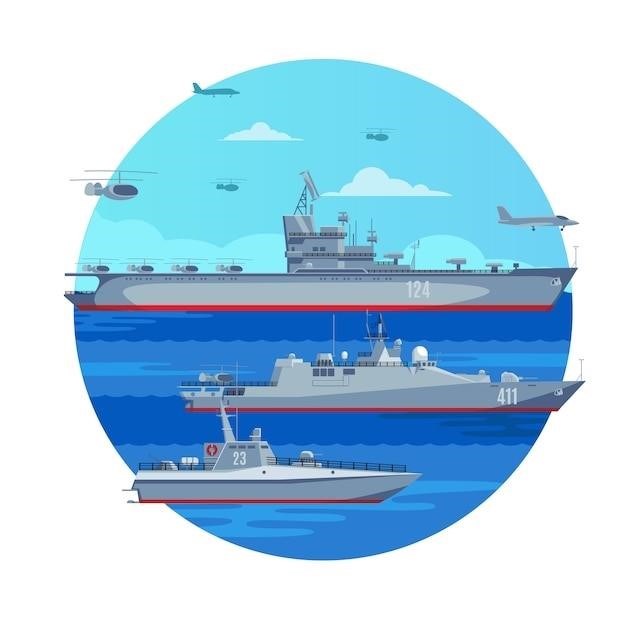
In conclusion, sealift ships are indispensable for modern naval operations, providing the logistical backbone for sustained deployments, strategic deployment, combat support, and special missions․ They are a vital component of U․S․ naval power, ensuring the readiness and effectiveness of the U․S․ Navy across the globe․
Military Sealift Command’s Responsibilities
Military Sealift Command (MSC) is a vital component of the U․S․ Department of Defense, entrusted with the critical responsibility of providing strategic sealift and ocean transportation for all branches of the U․S․ military․ MSC’s responsibilities are multifaceted and encompass a wide range of logistical and operational functions, ensuring the seamless movement of personnel, equipment, and supplies to support military operations worldwide․ These responsibilities include⁚
- Strategic Sealift⁚ MSC operates a fleet of civilian-crewed ships that transport military cargo and supplies over long distances, enabling the rapid deployment of forces and equipment to critical locations around the globe․
- Combat Logistics Support⁚ MSC provides combat logistics support to U․S․ Navy ships at sea, replenishing them with fuel, food, ammunition, and other essential supplies․ This ensures the sustained operational capability of naval forces during deployments․
- Prepositioning⁚ MSC strategically prepositions military equipment and supplies in key locations around the world, ensuring the availability of critical resources in times of need and facilitating a rapid response to unforeseen events․
- Special Missions⁚ MSC operates ships for a variety of special missions, including oceanographic surveys, underwater surveillance, humanitarian assistance, and support to other government agencies․ These missions contribute to national security and international cooperation․
- Manning and Training⁚ MSC is responsible for manning and training its civilian crews, ensuring that they possess the necessary skills and expertise to operate and maintain its diverse fleet of ships․
In addition to these core responsibilities, MSC also plays a vital role in supporting U․S․ national security objectives by providing logistical support to joint and combined military operations, contributing to the defense of U․S․ interests worldwide․
The History of Military Sealift Command
The history of Military Sealift Command (MSC) is deeply intertwined with the evolution of the U․S․ Navy and its role in global affairs․ The origins of MSC can be traced back to the early 20th century, when the U․S․ Navy established a system of civilian-crewed ships to support its growing fleet․ During World War II, the need for dedicated sealift capabilities became paramount, leading to the establishment of the War Shipping Administration in 1942․
Following the war, the U․S․ Navy recognized the enduring importance of a robust sealift capability and created the Military Sea Transportation Service (MSTS) in 1949․ MSTS served as the primary provider of strategic sealift for the U․S․ military, operating a vast fleet of ships and providing vital logistical support during the Cold War and numerous conflicts․
In 1973, MSTS was reorganized and renamed Military Sealift Command․ This change reflected a shift in focus towards a more streamlined and efficient organization, better equipped to meet the evolving needs of the U․S․ military․ MSC has since played a pivotal role in supporting U․S․ military operations around the globe, including the Persian Gulf War, the wars in Afghanistan and Iraq, and humanitarian relief efforts in response to natural disasters․
Throughout its history, MSC has adapted to changing geopolitical realities, technological advancements, and evolving military strategies․ It continues to play a vital role in ensuring the readiness and responsiveness of the U․S․ military, providing the essential logistical backbone for projecting American power and influence around the world․
The Future of Military Sealift Command
The future of Military Sealift Command (MSC) is shaped by a confluence of factors, including evolving geopolitical dynamics, technological advancements, and the evolving needs of the U․S․ military․ As the world becomes increasingly complex and interconnected, the demand for robust sealift capabilities is likely to grow․
MSC is already adapting to these challenges by investing in new technologies, such as autonomous systems and advanced communication networks, to enhance its efficiency and resilience․ The command is also exploring new approaches to maritime logistics, including the use of commercial shipping and the development of innovative partnerships with private industry․
Furthermore, MSC is facing the challenge of attracting and retaining a qualified workforce in a competitive maritime environment․ The command is actively seeking ways to address this challenge, including offering competitive salaries and benefits, providing opportunities for professional development, and promoting a culture of innovation and excellence․
Looking ahead, MSC is poised to play an even more critical role in supporting U․S․ national security interests․ The command’s ability to deliver critical supplies, equipment, and personnel to remote locations around the globe will be essential for maintaining a strong and responsive military force․ As the U․S․ Navy continues to modernize and adapt to the challenges of the 21st century, MSC will be a vital partner in ensuring its success․
Challenges Faced by Military Sealift Command
Military Sealift Command (MSC) faces a number of challenges in fulfilling its mission to support U․S․ naval power․ One significant challenge is the aging fleet․ Many of MSC’s ships are nearing the end of their service lives, requiring significant investments in modernization or replacement․ This poses a challenge to maintaining a reliable and capable fleet․
Another challenge is the availability of qualified civilian mariners․ The maritime industry is facing a shortage of skilled personnel, making it difficult for MSC to recruit and retain a qualified workforce․ This shortage is exacerbated by the increasingly competitive nature of the global maritime market․
MSC also faces challenges related to the evolving geopolitical landscape; The increasing complexity and intensity of international relations require MSC to adapt to new threats and operating environments․ This includes operating in contested waters, navigating potential disruptions to global supply chains, and responding to emerging maritime security threats․
Despite these challenges, MSC remains committed to fulfilling its mission and adapting to the changing demands of the 21st century․ The command is actively pursuing solutions to address these challenges, such as investing in new technologies, exploring innovative partnerships, and promoting a culture of excellence within its workforce․