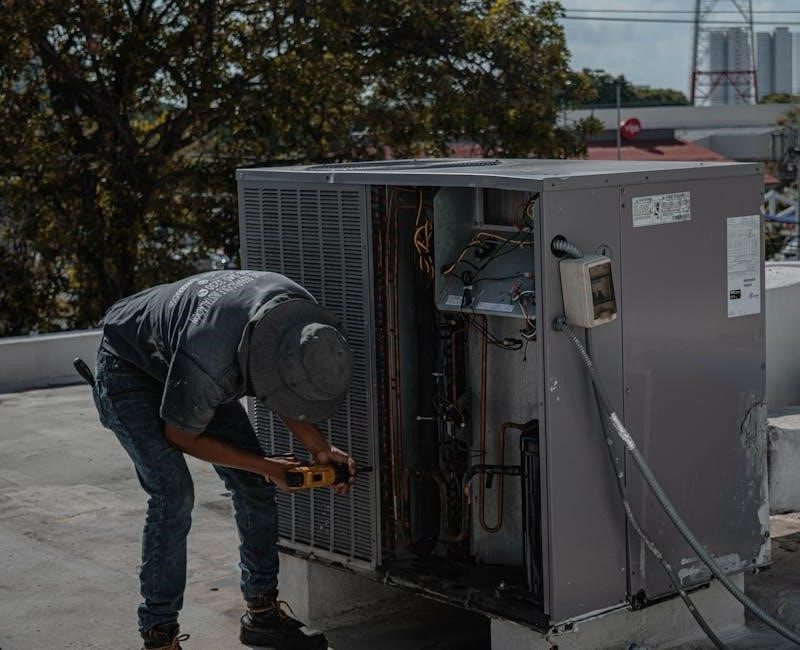
Welcome to the Mitsubishi Heavy Industries Air Conditioner User Manual. This guide provides essential information for optimal performance, safety, and maintenance of your air conditioning system.
1.1 Overview of Mitsubishi Heavy Industries Air Conditioners
Mitsubishi Heavy Industries air conditioners are renowned for their high performance, energy efficiency, and innovative technology. Designed to provide superior comfort, these systems cater to both residential and commercial spaces. The product range includes split-system, packaged, and ducted air conditioners, offering flexibility for various installation needs. With advanced features like inverter technology, these units ensure consistent temperature control while minimizing energy consumption. Mitsubishi Heavy Industries air conditioners are also known for their quiet operation, sleek designs, and eco-friendly solutions, making them a preferred choice globally. By integrating cutting-edge engineering, the brand delivers reliable and durable cooling solutions that meet modern lifestyle demands while promoting environmental sustainability.
1.2 Importance of Reading the User Manual
Reading the Mitsubishi Heavy Industries air conditioner user manual is crucial for ensuring optimal performance, safety, and longevity of the system. The manual provides detailed instructions on proper installation, operation, and maintenance, helping users avoid potential errors. It also outlines essential safety precautions, such as handling batteries correctly and disposing of them responsibly, as per EU directives. By following the guidelines, users can maximize energy efficiency and troubleshoot common issues effectively. The manual serves as a comprehensive guide to understanding advanced features and settings, ensuring a seamless experience. Neglecting to read it may lead to suboptimal performance or even system damage. Always refer to the manual before operating or maintaining your air conditioner.
1.3 Key Features of Mitsubishi Heavy Industries Air Conditioners
Mitsubishi Heavy Industries air conditioners are renowned for their advanced features, designed to provide superior comfort and efficiency. They include energy-saving modes, quiet operation, and precise temperature control. The systems often feature cutting-edge inverter technology, which optimizes performance while reducing energy consumption. Additionally, many models offer advanced air purification systems, ensuring cleaner indoor air quality. User-friendly remote controls and intuitive interfaces make operation seamless. Some units also include smart sensors that detect room conditions and adjust settings automatically. These features collectively enhance comfort, efficiency, and durability, making Mitsubishi Heavy Industries air conditioners a top choice for both residential and commercial spaces. Proper use of these features, as outlined in the manual, ensures optimal performance and longevity.

Safety Precautions and Warnings
Always follow safety guidelines to avoid hazards. Properly dispose of batteries and electrical components, adhering to EU directives. Handle batteries carefully to prevent damage or chemical exposure.
2.1 General Safety Guidelines
Ensure safe operation by following all guidelines in this manual. Avoid improper installation, usage, or modification of the air conditioner. Always use original parts and accessories to maintain safety and performance. Keep the unit away from flammable materials and ensure proper ventilation. Regularly inspect the power cord and plug for damage. Never touch electrical components with wet hands or while standing on a wet surface. Keep children away from moving parts and controls. Follow all local regulations and safety standards. Properly dispose of batteries and electrical waste as per EU directives. Refer to the manual for detailed safety instructions to ensure safe and efficient operation of your Mitsubishi Heavy Industries air conditioner.
2.2 Proper Handling of Batteries

Always handle batteries with care to ensure safety and compliance with environmental regulations. Use only the recommended batteries for your Mitsubishi Heavy Industries air conditioner remote control or other components. Avoid mixing old and new batteries or different types, as this can cause malfunction or leakage. Remove batteries from the device when not in use for extended periods to prevent corrosion. Dispose of batteries separately from household waste, adhering to EU directives and local regulations. If a chemical symbol is present, it indicates the battery contains heavy metals, requiring special disposal. Proper handling ensures environmental protection and safety. Refer to the manual for specific guidelines on battery usage and disposal for your air conditioner.
2.3 Disposal of Batteries and Electrical Components
Proper disposal of batteries and electrical components is crucial for environmental protection. Batteries should not be disposed of with general household waste, as they may contain heavy metals like lead or mercury. Check for a chemical symbol on the battery, indicating the presence of such substances. Dispose of batteries at designated recycling centers or collection points. Electrical components should also be recycled responsibly to prevent hazardous materials from entering landfills. Follow EU directives and local regulations for safe disposal. Proper disposal helps minimize environmental impact and ensures compliance with legal requirements. Always refer to the user manual for specific guidelines on handling and disposing of your air conditioner’s batteries and electrical parts.

Installation and Setup
Ensure proper installation by following pre-installation requirements and guidelines. Hire a professional for accurate setup. Post-installation checks guarantee efficient operation and safety of your air conditioner system.
3.1 Pre-Installation Requirements
Before installing your Mitsubishi Heavy Industries air conditioner, ensure the installation site meets all safety and technical requirements. Verify the space dimensions, electrical connections, and compatibility with the unit. Read the user manual carefully to understand the specific needs for your model, such as the SRK63ZM-S or SRK71ZM-S. Ensure the area is clear of obstacles and flammable materials. Check the power supply and ensure it matches the unit’s specifications. Properly handle and dispose of batteries according to EU directives, as indicated by the symbols on the packaging. Ensure all components are compatible with your system to avoid operational issues. Consulting a professional is recommended for complex setups to guarantee safety and efficiency.
3.2 Step-by-Step Installation Guide
Begin by carefully unpacking the air conditioner components, ensuring no damage occurred during shipping. Mount the indoor unit on a sturdy wall, following the provided template for accurate placement. Install the outdoor unit on a level surface, ensuring proper ventilation and compliance with local regulations. Connect the refrigerant pipes, electrical wires, and drainage system according to the manual’s instructions. Secure all connections tightly to prevent leaks or malfunctions. Power on the system and test each function to ensure proper operation. If unsure, consult a certified technician to avoid safety risks. Double-check all connections and settings before finalizing the installation. Proper installation ensures optimal performance and longevity of your Mitsubishi Heavy Industries air conditioner.
3.3 Post-Installation Checks
After installation, ensure the air conditioner is functioning correctly. Check for any refrigerant leaks by inspecting the connections. Verify proper drainage by running the system in cooling mode. Inspect electrical connections to ensure they are secure and meet safety standards. Test the remote control to confirm all functions operate smoothly. Ensure the system is level and properly ventilated. Review the user manual to confirm all settings are correctly programmed. If any issues arise, consult the troubleshooting section or contact a certified technician. Proper post-installation checks ensure your Mitsubishi Heavy Industries air conditioner operates efficiently and safely, providing reliable performance for years to come.
Operating the Air Conditioner
Operating the Mitsubishi Heavy Industries air conditioner involves using the remote control for temperature settings and mode selection. Ensure proper ventilation for efficient cooling and energy savings.

4.1 Basic Operation and Controls
Operating your Mitsubishi Heavy Industries air conditioner begins with understanding its basic controls. The remote control allows you to adjust temperature, fan speed, and operation modes. Press the “ON/OFF” button to start or stop the unit. Use the “MODE” button to select cooling, heating, or fan-only operation. Adjust the temperature using the “+” and “-” buttons. Ensure proper ventilation by keeping doors and windows closed for efficient cooling. Regularly check the air filter to maintain performance. Refer to the user manual for detailed instructions on advanced features and troubleshooting common issues. Proper usage ensures energy efficiency and extends the lifespan of your air conditioner.
4.2 Using the Remote Control
The remote control is a convenient way to operate your Mitsubishi Heavy Industries air conditioner. Press the “ON/OFF” button to power the unit on or off. Use the “MODE” button to cycle through operation modes, such as cooling, heating, or fan-only. Adjust the temperature using the “+” and “-” buttons for precise control. The “FAN” button allows you to set the fan speed to low, medium, or high. For energy efficiency, use the “TIMER” button to set the OFF timer, which turns the unit off after a specified time. Ensure the remote has clear line of sight to the air conditioner for proper functionality. Replace the batteries when the remote’s performance diminishes, following the guidelines in the user manual for proper disposal.
4.3 Advanced Settings and Features
Mitsubishi Heavy Industries air conditioners offer advanced settings for enhanced comfort and efficiency. The energy-saving mode reduces power consumption while maintaining optimal temperatures; Use the timer function to schedule operations, ensuring the unit turns on or off automatically. The remote control allows access to these features, enabling seamless adjustments. Additional settings include fan speed customization and advanced filtration options. These features ensure personalized comfort and energy efficiency. Regularly reviewing and adjusting these settings can optimize performance and extend the unit’s lifespan. Always refer to the user manual for detailed instructions on utilizing these advanced features effectively.

Maintenance and Cleaning
Regular maintenance ensures optimal performance and longevity. Clean the air filter monthly and check for blockages. Address issues promptly to prevent system damage and maintain efficiency.
5.1 Regular Maintenance Tasks
Regular maintenance is crucial for ensuring your Mitsubishi Heavy Industries air conditioner operates efficiently and effectively. Start by cleaning or replacing the air filter monthly to maintain airflow and reduce energy consumption. Inspect the outdoor unit for debris and ensure proper drainage to prevent water accumulation. Check refrigerant levels and electrical connections annually to avoid performance issues. Additionally, dispose of batteries and electrical components responsibly, adhering to environmental guidelines. Schedule professional servicing every 12 months to address complex maintenance needs. By following these tasks, you can extend the lifespan of your air conditioner, maintain optimal performance, and reduce the risk of unexpected breakdowns.
5.2 Cleaning the Air Filter
Cleaning the air filter is a simple yet essential maintenance task for your Mitsubishi Heavy Industries air conditioner. Turn off the power before removing the filter. Gently vacuum or wash the filter with mild soap and water. Allow it to dry completely to prevent mold growth. Replace the filter after cleaning and ensure it is securely fitted. Clean the filter monthly or more frequently in dusty environments to maintain airflow and efficiency. A dirty filter can reduce cooling performance and increase energy consumption. Regular cleaning helps prolong the unit’s lifespan and ensures optimal air quality. Always refer to your user manual for specific instructions tailored to your model.
5.3 Troubleshooting Common Maintenance Issues
Identifying and resolving common maintenance issues ensures your Mitsubishi Heavy Industries air conditioner operates efficiently. If error codes appear, refer to the manual for specific solutions. Unusual noises may indicate loose parts or blockages in the vents. Check for obstructions and tighten any loose components. Water leakage could signal a clogged drain or improper installation. Inspect and clean the drain regularly. If issues persist, consult the troubleshooting section or contact Mitsubishi support. Regular checks can prevent major problems, ensuring optimal performance and extending the unit’s lifespan. Always follow the manual’s guidelines for safe and effective troubleshooting to avoid further complications.

Troubleshooting Common Issues
Identify error codes and resolve common operational problems by referring to the manual. Resetting the unit or consulting Mitsubishi support can address persistent issues effectively.
6.1 Identifying Error Codes
Mitsubishi Heavy Industries air conditioners display error codes to indicate specific issues. These codes, found in the user manual, help diagnose problems like sensor malfunctions or refrigerant leaks. Refer to the manual’s error code section for detailed explanations and solutions. If an error code appears, note it down before resetting the unit. This ensures accurate troubleshooting. Always follow the manual’s guidance for resolving errors to avoid further damage. Properly addressing error codes ensures optimal performance and extends the lifespan of your air conditioner. Consulting the manual or contacting Mitsubishi support is recommended for persistent issues. Regular maintenance can also prevent many common errors.
6.2 Resolving Common Operational Problems
Common operational issues with Mitsubishi Heavy Industries air conditioners can often be resolved with simple troubleshooting. If the unit does not turn on, check the power supply and ensure the circuit breaker is not tripped. For remote control issues, replace the batteries or ensure they are properly installed. If the air conditioner is not cooling, inspect the air filter for cleanliness and ensure all vents are unobstructed. Error codes can guide you to specific problems, such as sensor malfunctions or refrigerant leaks. Refer to the user manual for code meanings and solutions. Resetting the unit may resolve temporary glitches. Always follow safety precautions and consult the manual or contact Mitsubishi support for persistent issues. Regular maintenance can prevent many operational problems.
6.3 Resetting the Air Conditioner
Resetting your Mitsubishi Heavy Industries air conditioner can resolve temporary operational issues. To reset, press and hold the reset button located on the indoor unit or remote control for 3-5 seconds. Release the button and wait for 30 seconds before turning the unit back on. Ensure the power supply is stable during this process. If the issue persists, check the error code displayed on the unit or remote control and refer to the user manual for specific solutions. Resetting does not affect saved settings or schedules. If problems continue, contact Mitsubishi Heavy Industries customer support for assistance. Regular resets can help maintain optimal performance and prevent minor glitches. Always follow the manual’s guidelines for resetting procedures.
Energy Efficiency and Environmental Considerations
Energy efficiency is maximized through advanced settings and eco-friendly modes. Proper disposal of batteries and components ensures environmental safety. Follow guidelines for sustainable usage and maintenance.
7.1 Energy-Saving Modes and Features
Mitsubishi Heavy Industries air conditioners offer advanced energy-saving modes designed to reduce power consumption while maintaining comfort. The Eco Mode adjusts settings to optimize energy efficiency, minimizing environmental impact. Smart sensors detect room occupancy and adjust cooling or heating accordingly. Additionally, programmable timers allow users to set operation schedules, ensuring the system runs only when needed. These features not only lower energy bills but also contribute to a reduced carbon footprint. By utilizing these modes, users can enjoy efficient performance while supporting environmental sustainability. Proper disposal of batteries and components, as outlined in EU directives, further enhances eco-friendly practices. Regular maintenance ensures these features function optimally, promoting long-term energy efficiency and environmental responsibility.

7.2 Environmental Impact and Disposal Guidelines
Mitsubishi Heavy Industries air conditioners are designed with environmental responsibility in mind. Proper disposal of batteries and electrical components is crucial to minimize ecological impact. According to EU directives, batteries should not be disposed of with general household waste. If a chemical symbol is present, it indicates the presence of heavy metals, requiring special handling. Users are encouraged to recycle these components responsibly. Always follow local regulations for waste disposal to ensure sustainability. Mitsubishi emphasizes eco-friendly practices, aligning with global efforts to reduce environmental harm. By adhering to these guidelines, users contribute to a greener future while maintaining the performance of their air conditioning systems.

Warranty and Customer Support
Mitsubishi Heavy Industries offers comprehensive warranty terms for air conditioners, ensuring coverage for parts and labor. For support, contact their dedicated team via official channels for assistance and inquiries.
8.1 Understanding the Warranty Terms
Mitsubishi Heavy Industries provides a comprehensive warranty for their air conditioners, ensuring coverage for parts and labor under specific conditions. The warranty period typically begins from the date of installation, provided the unit is installed by an authorized technician. It is essential to review the terms and conditions outlined in the user manual, as coverage may vary depending on the model and region. Proper maintenance and adherence to operational guidelines are often required to maintain warranty validity. For detailed information, refer to the warranty section in the manual or contact Mitsubishi Heavy Industries support directly. Understanding the warranty terms ensures you can address any issues promptly and enjoy uninterrupted performance from your air conditioner.
8.2 Contacting Mitsubishi Heavy Industries Support
For any inquiries or assistance regarding your Mitsubishi Heavy Industries air conditioner, contact their dedicated customer support team. You can reach them via phone, email, or through the official website. The support team is available to address questions about installation, maintenance, troubleshooting, and warranty claims. Additionally, the website provides access to downloadable user manuals, technical specifications, and FAQs. For specific concerns, ensure to have your model number and serial number ready. Regional support offices are also available to cater to location-specific needs. Mitsubishi Heavy Industries is committed to providing prompt and reliable assistance to ensure optimal performance and satisfaction with your air conditioning system.

Appendices
This section provides additional resources, including technical specifications, a glossary of terms, and references for further reading, ensuring comprehensive understanding of your Mitsubishi air conditioner.
9.1 Technical Specifications
This section outlines the detailed technical specifications of Mitsubishi Heavy Industries air conditioners, including model numbers, cooling capacities, and energy efficiency ratings. Key features such as inverter technology, silent operation, and multiple fan speeds are highlighted. The specifications also cover refrigerant types, noise levels, and dimensions, ensuring compatibility with various spaces. Additionally, the section provides information on operating modes, temperature ranges, and power consumption. For precise details, refer to the model-specific data provided in this manual. This information helps users understand the capabilities and limitations of their air conditioner, ensuring optimal performance and energy efficiency. Always consult the technical specifications to confirm compatibility with your installation requirements.
9.2 Glossary of Terms
This section provides definitions for key terms related to Mitsubishi Heavy Industries air conditioners. Inverter Technology refers to the system that adjusts compressor speed for efficient cooling. Refrigerant is the substance used to transfer heat from indoors to outdoors. SEER (Seasonal Energy Efficiency Ratio) measures cooling efficiency over a season. EER (Energy Efficiency Ratio) indicates efficiency at fixed outdoor temperatures. Condenser Coil dissipates heat outside, while the Evaporator Coil absorbs heat indoors. Thermostat controls temperature settings. Smart Operation enables remote control via apps. Fan Speed adjusts airflow for comfort. Understanding these terms helps users optimize their air conditioner’s performance and maintenance.
9.3 References and Further Reading
For additional information, refer to the official Mitsubishi Heavy Industries website, which provides detailed resources and model-specific guides. The Users Manual for Split-system air conditioners is available for download in PDF format. Visit the Mitsubishi Heavy Industries Thermal Systems, LTD. portal to access manuals by model name and year. ManualsLib also offers free PDF downloads for packaged air conditioners. These resources ensure comprehensive understanding and troubleshooting. Always consult official sources for accurate and up-to-date information to maintain optimal performance and safety of your Mitsubishi Heavy Industries air conditioner.