
Truck Manual Gearbox: A Comprehensive Overview
Truck manual gearboxes utilize gear drives, offering advantages and disadvantages depending on application; understanding types – constant mesh, synchronized, and non-synchronized – is crucial for operation.
Truck manual gearboxes represent a foundational technology in commercial vehicle operation, historically vital and still prevalent today. These systems rely on a driver-controlled gear drive to manage engine power and vehicle speed, offering a direct mechanical connection. Understanding the advantages and disadvantages of different gearbox types – constant mesh, synchronized, and older non-synchronized designs – is essential.
The gearbox’s primary function is to multiply torque, allowing trucks to overcome varying loads and terrains. Proper operation demands skill, but provides significant control. Modern advancements, like Automated Manual Transmissions (AMTs), are emerging, yet manual gearboxes remain a cost-effective and reliable choice.
Historical Development of Manual Transmissions in Trucks
Early truck transmissions were rudimentary, often non-synchronized, demanding considerable driver skill for smooth operation. As trucking evolved, so did gearbox technology. The introduction of constant mesh gearboxes improved reliability, reducing wear and tear. Later, synchronized gearboxes significantly eased shifting, lessening driver fatigue and enhancing efficiency.
Throughout the 20th century, manufacturers continually refined gear ratios and materials. While AMTs now present a modern alternative, the manual gearbox’s legacy remains strong, representing decades of practical development and a direct connection between driver and machine.
Basic Components of a Truck Manual Gearbox
A truck manual gearbox fundamentally comprises several key components. These include the input shaft, connected to the engine’s flywheel; countershaft, facilitating gear speed changes; output shaft, delivering power to the driveshaft; and a series of gears with varying ratios.
Synchronizers, crucial in modern transmissions, enable smoother gear engagement. The shift forks and selector mechanism allow the driver to choose the desired gear. Robust housing and bearings support these elements, ensuring durability and efficient power transfer.

Gear Ratios and Their Importance
Gear ratios within a truck’s manual gearbox are paramount for performance and efficiency. Lower ratios provide increased torque for starting and climbing, while higher ratios offer better fuel economy at cruising speeds. Selecting the appropriate ratio depends on load, terrain, and desired speed.
These ratios dictate the mechanical advantage, influencing engine RPM versus wheel speed. Proper ratio selection minimizes strain on the engine and maximizes power delivery, ultimately impacting overall vehicle operation and longevity.
Types of Truck Manual Gearboxes

Truck manual gearboxes broadly fall into three categories: constant mesh, synchronized, and non-synchronized. Constant mesh gearboxes offer smooth, quiet operation, while synchronized gearboxes facilitate easier shifting by matching gear speeds. Older models often utilized non-synchronized designs, requiring skilled double-clutching.
Each type presents unique characteristics regarding complexity, durability, and driver skill required. Modern trucks predominantly employ synchronized systems for ease of use and reduced driver fatigue.

Constant Mesh Gearboxes
Constant mesh gearboxes feature gears that are always meshed, providing a quieter and smoother operation compared to other types. This design minimizes wear and tear, enhancing durability. However, they require precise timing and coordination during shifting, as gears don’t automatically synchronize.
Historically prevalent, these systems demand a higher level of driver skill. They are less common in modern trucks due to the increased ease of use offered by synchronized alternatives, despite their inherent robustness.
Synchronized Gearboxes
Synchronized gearboxes represent a significant advancement in truck transmission technology. They employ synchronizers – friction devices – to match the speeds of the gears before engagement, resulting in smoother, faster, and easier shifting. This reduces driver effort and minimizes wear on the gears themselves.
Modern trucks predominantly utilize synchronized gearboxes due to their user-friendliness and efficiency. While slightly more complex than constant mesh designs, the benefits outweigh the added intricacy for most applications.
Non-Synchronized Gearboxes (Older Models)
Non-synchronized gearboxes, commonly found in older trucks, lack the synchronizer mechanisms present in modern transmissions. This necessitates precise “double-clutching” – a technique where the driver manually matches engine and transmission speeds before each gear change.
While simpler in design, these gearboxes demand significant driver skill and can result in harsher shifts and increased wear if not operated correctly. They are less fuel-efficient and require more driver fatigue compared to synchronized systems.

How a Truck Manual Gearbox Works: A Step-by-Step Guide
Truck manual gearboxes function through a series of gears, engaging different ratios to alter torque and speed. The driver uses the clutch to disconnect the engine, selecting a gear via the shift lever. This engages the chosen gearset, transmitting power to the driveshaft.
Proper coordination – clutch disengagement, gear selection, and smooth clutch re-engagement – is vital. Gear ratios determine the mechanical advantage, impacting acceleration and fuel efficiency. Mastering this process requires practice and understanding of engine RPM.
Advantages of Manual Gearboxes in Trucks
Truck manual gearboxes offer distinct benefits. They generally provide improved fuel efficiency due to direct power transfer and driver control over engine RPM. Drivers gain greater control, especially in challenging terrains or demanding applications, optimizing performance.
Furthermore, manual transmissions typically have a lower initial cost compared to automatic or automated manual transmissions (AMTs). This makes them an attractive option for budget-conscious operators, despite the increased skill required for operation.
Improved Fuel Efficiency
Truck manual gearboxes often demonstrate superior fuel economy. This stems from the driver’s ability to precisely select gear ratios, maintaining optimal engine RPM for the current load and speed. Unlike automatic systems, manual transmissions minimize parasitic losses.
Direct power transfer, achieved through a mechanical connection, further enhances efficiency. Skilled drivers can anticipate road conditions and shift proactively, maximizing fuel savings and reducing overall operating costs within trucking applications.
Greater Control for the Driver
Truck manual gearboxes empower drivers with a heightened sense of control. This stems from the direct mechanical link between the engine and wheels, allowing precise gear selection based on terrain and load. Drivers can confidently navigate challenging conditions, like steep inclines or descents, by choosing the appropriate gear ratio.
This granular control enhances safety and responsiveness, crucial for heavy-duty trucking. Experienced operators leverage this to optimize performance and manage vehicle momentum effectively.
Lower Initial Cost
Truck manual gearboxes generally present a more affordable upfront investment compared to automatic or automated manual transmissions (AMTs). The simpler mechanical design translates to lower manufacturing costs, directly benefiting fleet operators and individual truck owners. This cost advantage can be significant, especially when purchasing multiple vehicles.
Reduced complexity also often means lower parts costs and potentially simpler repair procedures, contributing to long-term savings.
Disadvantages of Manual Gearboxes in Trucks
Truck manual gearboxes, while offering benefits, present drawbacks. Driver fatigue is a key concern due to the constant need for clutch operation and gear selection, especially in demanding conditions. A steeper learning curve exists compared to automatics, requiring significant skill development.
Furthermore, slower shifting times can impact efficiency and potentially increase wear and tear on components, impacting overall operational speed and smoothness.
Driver Fatigue
Driver fatigue is a significant disadvantage of truck manual gearboxes. The repetitive actions – pressing the clutch, shifting gears, and constant attention to road conditions – demand considerable physical and mental effort. Long haul routes exacerbate this, leading to reduced concentration and increased risk of errors.
This continuous engagement can cause muscle strain and overall exhaustion, impacting driver safety and performance over extended periods, ultimately affecting delivery schedules.
Steeper Learning Curve
Truck manual gearboxes present a steeper learning curve for new drivers compared to automatic transmissions. Mastering clutch control, precise gear selection, and coordinating these actions with throttle and braking requires significant practice and skill development.
Successfully navigating hills, stop-and-go traffic, and varying load conditions demands a thorough understanding of the gearbox’s mechanics and proper shifting techniques, potentially delaying operational readiness.
Slower Shifting Times
Truck manual gearboxes inherently involve slower shifting times than automated alternatives. The process of depressing the clutch, selecting the appropriate gear, and releasing the clutch sequentially adds time to each gear change.
This can impact overall travel time, particularly in scenarios requiring frequent shifting, like urban driving or hilly terrain. While skilled drivers minimize this delay, it remains a fundamental characteristic of manual systems.

Common Problems with Truck Manual Gearboxes

Truck manual gearboxes are robust, but prone to specific issues. Worn synchronizers cause grinding during shifts, while damaged gears result in noise and difficulty selecting gears. Clutch issues, including slippage or failure, are frequent, impacting power transfer.
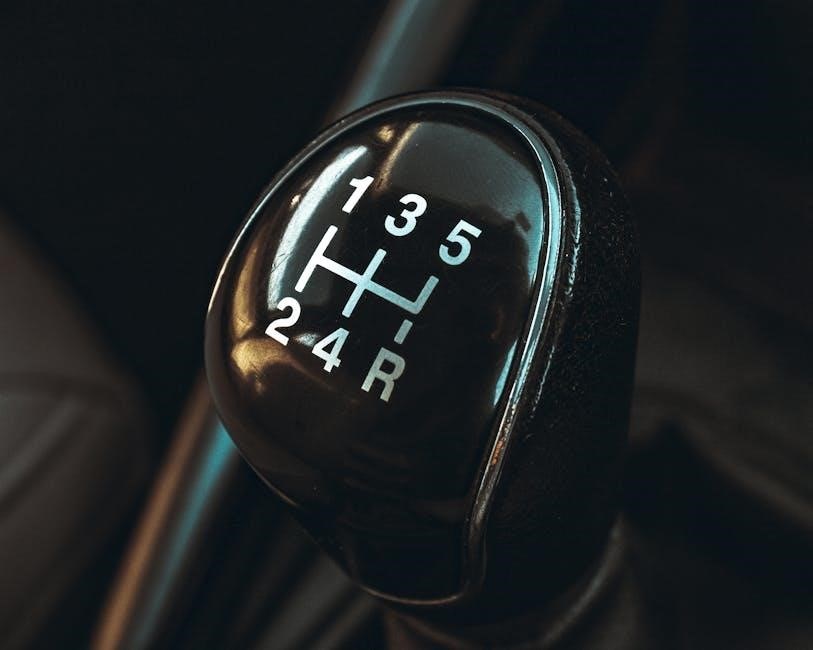
Regular maintenance can mitigate these problems, but ignoring warning signs leads to costly repairs and potential transmission failure, disrupting operations and increasing downtime.
Worn Synchronizers
Worn synchronizers within a truck manual gearbox are a common ailment, manifesting as difficulty smoothly engaging gears. These components equalize rotational speeds before engagement, and wear causes grinding or clashing noises during shifts. This impacts drivability and accelerates gear wear.
Ignoring this issue leads to further damage, potentially requiring a complete gearbox overhaul. Regular fluid checks and proper shifting techniques can prolong synchronizer life.
Damaged Gears
Damaged gears within a truck manual gearbox represent a serious issue, often stemming from improper shifting, lack of lubrication, or excessive load. Symptoms include loud whining, grinding, or even complete loss of a gear. This can occur in constant mesh, synchronized, or older non-synchronized systems.
Ignoring gear damage leads to catastrophic failure, necessitating costly repairs or a full transmission replacement. Prompt diagnosis and repair are crucial to prevent further complications;
Clutch Issues
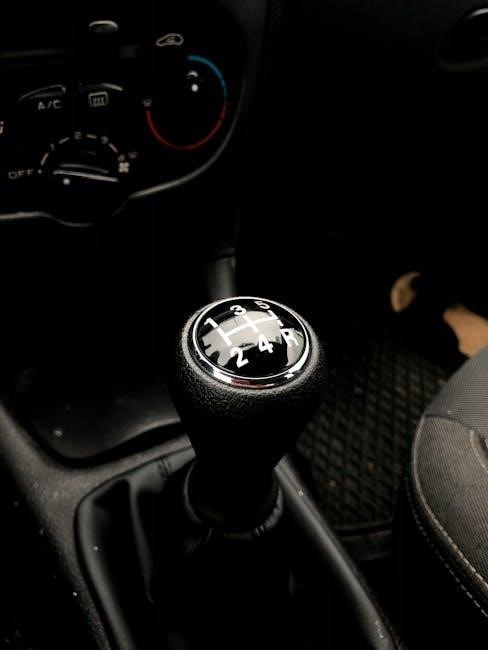
Clutch problems are frequent in truck manual gearboxes, manifesting as slipping, grabbing, or difficulty engaging/disengaging gears. Worn clutch discs, a faulty pressure plate, or a failing master/slave cylinder are common culprits. These issues impact shifting smoothness and overall vehicle control.
Regular clutch adjustment and eventual replacement are essential maintenance procedures. Ignoring clutch issues can lead to further damage within the transmission itself, increasing repair costs.
Maintenance and Troubleshooting
Regular maintenance is vital for truck manual gearbox longevity. This includes frequent fluid level checks and timely fluid changes to ensure proper lubrication and cooling. Clutch adjustment is crucial for smooth operation, and eventual replacement is inevitable with wear.
Troubleshooting involves identifying unusual noises – grinding, whining – and addressing them promptly. Inspecting for leaks and ensuring proper linkage adjustment are also key preventative measures.
Regular Fluid Checks and Changes
Consistent fluid checks are paramount for truck manual gearbox health. Inspect the fluid level regularly, ensuring it’s within the manufacturer’s specifications. Look for any signs of contamination – metallic particles or a burnt smell – indicating potential internal damage.
Scheduled fluid changes, using the correct grade of gear oil, are essential for lubrication and heat dissipation, preventing premature wear and extending the gearbox’s lifespan.
Clutch Adjustment and Replacement

Proper clutch adjustment is vital for smooth gear changes in a truck manual gearbox. Regularly check and adjust the clutch pedal free play according to the manufacturer’s guidelines. Incorrect adjustment can lead to slipping, grabbing, or difficulty selecting gears.
When adjustment is insufficient, clutch replacement may be necessary. This involves disconnecting the transmission and replacing the clutch disc, pressure plate, and release bearing, restoring optimal performance.
Identifying and Addressing Unusual Noises
Unusual noises emanating from a truck manual gearbox often indicate underlying issues. Grinding sounds during gear changes suggest worn synchronizers, while whining noises could point to damaged gears or low fluid levels.
Clunking sounds may stem from excessive play in the drivetrain. Promptly investigate any new or worsening noises. Addressing these sounds early prevents further damage and costly repairs, ensuring reliable operation of the transmission.
The Future of Manual Gearboxes in Trucks
The future of manual gearboxes in trucks is uncertain, facing competition from automatic and automated manual transmissions (AMTs); While offering driver control and potentially better fuel efficiency, manual transmissions require skilled operators.
Advancements in AMT technology, providing similar control with reduced driver fatigue, are gaining traction. However, manual gearboxes may persist in specific applications where cost and simplicity are paramount, or for drivers preferring a direct connection to the vehicle.
Comparison with Automatic and Automated Manual Transmissions (AMTs)
Compared to automatics, manual gearboxes traditionally offer better fuel economy and driver control, though automatics are closing the gap. AMTs blend manual gearbox efficiency with automated shifting, reducing driver fatigue.
AMTs utilize computer control for gear selection, mimicking a manual gearbox without a clutch pedal. While manuals require driver skill, AMTs and automatics prioritize ease of use. Initial costs are generally lower for manuals, but long-term maintenance can vary.
Selecting the Right Manual Gearbox for Your Truck
Choosing the correct gearbox depends heavily on the truck’s intended application and load requirements. Consider the engine’s torque curve and the typical terrain. Heavier loads demand lower gear ratios for increased pulling power, while highway driving benefits from higher ratios for fuel efficiency.
Evaluate the type – constant mesh, synchronized, or non-synchronized – based on operational needs and budget. Prioritize durability and reliability, factoring in potential maintenance costs. Proper gearbox selection optimizes performance and longevity.
Safety Considerations When Operating a Manual Truck Gearbox
Safe operation requires complete driver attention and proper technique. Always ensure the truck is at a complete stop before shifting gears, and fully depress the clutch pedal. Avoid riding the clutch, as this causes wear and potential failure. Be mindful of surroundings, especially when downshifting on inclines.
Regularly inspect the gearbox for leaks or unusual noises. Never attempt repairs without proper training and safety equipment. Prioritize preventative maintenance to avoid unexpected mechanical issues while driving.